
Story
Retaj Ben Khalifa
Volunteer, Libyan Red Crescent
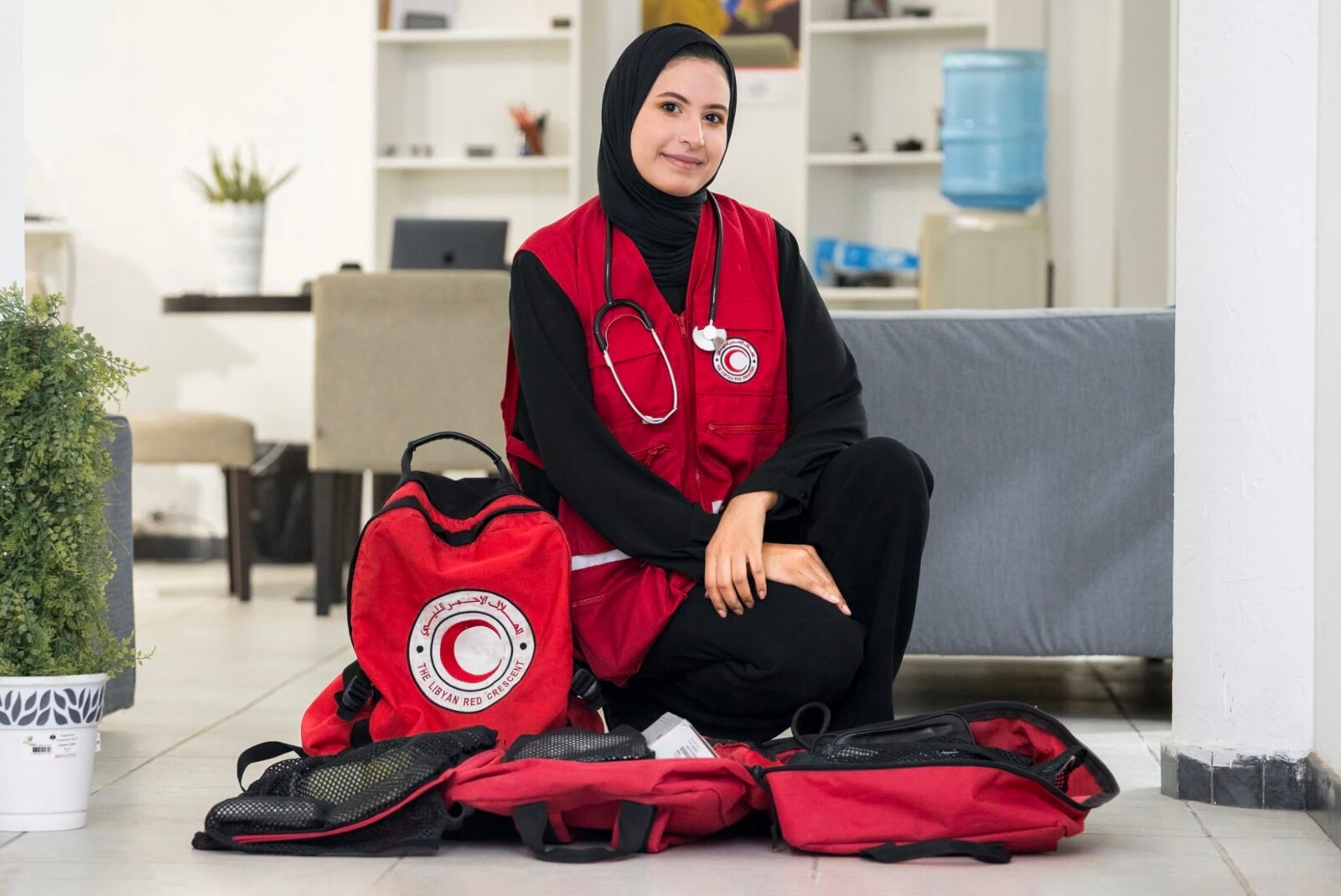
In times of crisis, you find yourself at a crossroads; you either choose to be negative or be positive and volunteer to help alleviate the war. Because volunteering is like zakat - you take a part of yourself and give it to someone in need.
My name is Retaj Ben Khalifa. I volunteer at the Libyan Red Crescent.
I began volunteering at the Libyan Red Crescent in 2016 when I passed a special training for disaster response. I earned the “First responder” title, and started my journey toward achieving my ultimate goal of volunteering.
I volunteered with different Red Crescent teams, including mental and social support teams, body recovery, and emergency teams. In Tripoli, there were many wars, and the humanitarian situation was devastating during the last war; it can make someone confused between their own humanitarian duties and repressed emotions.
Nothing can be compared to witnessing displaced people dealing with previous mental disorders suffer from what the war did to them. The most difficult experience of my life was dealing with a complicated mentally ill mother who started abusing her child due to the shortage of her medication.
Volunteering is definitely a challenge. It can test one’s limits to the point of giving up the ability to express your emotions and vent. The effect of such experiences was not good for my mental health. Even after the war was over, I couldn't forget all those terrible stories, because I was used to always listening to their tales. I think they will always leave an imprint on my heart.
Today, I’m more aware of the importance of mental health. In my opinion, any volunteer (especially in this field) must be able to separate one’s work and personal life, and be aware of how dangerous projections can interfere with personal lives.
Whatever the interior motives any war has, civilians pay the most through the loss of any emotional stability. Especially in a country that does not provide any mental health support or help people who battle with PTSD, what we suffer to this day.
Story: Mohammed Ben OmranEnglish Version: Hala AbushawashiPhotographer: Samer S. Alamri